On January 8, 2026, the U.S. Department of Transportation announced what many of us in the industry expected: the minimum random drug testing rate for CDL drivers remains at 50%, with alcohol testing holding steady at 10%.
If you're keeping score at home, that's six consecutive years at these rates since FMCSA bumped them up from 25% in January 2020. And based on the numbers coming out of the Drug & Alcohol Clearinghouse, don't expect that to change anytime soon.
Why the Rate Stays Where It Is
Here's how the system works: FMCSA operates on a performance-based testing model established in a 2001 final rule called "Controlled Substances and Alcohol Use and Testing." When the industry's positive random drug test rate hits or exceeds 1.0%, the agency is required to increase testing to 50%. To bring it back down to 25%, we'd need to see positive rates drop below 1.0% for two consecutive calendar years.
That's not happening.
The last time we saw a decrease was in 2016, when positive rates remained low enough for the FMCSA to reduce testing to 25%. That didn't last long. By 2018, positive test rates had risen to 1.0%, prompting the return to 50% testing in 2020.
The Clearinghouse Tells the Story
Want to understand why the rate isn't budging? Look at the Drug & Alcohol Clearinghouse data.
Since January 2020:
- Over 300,000 test results with violations have been reported
- 324,996 drivers have at least one violation on record
- Over 200,000 drivers are currently in prohibited status
- Of those prohibited drivers, over 150,000 haven't even started the return-to-duty process
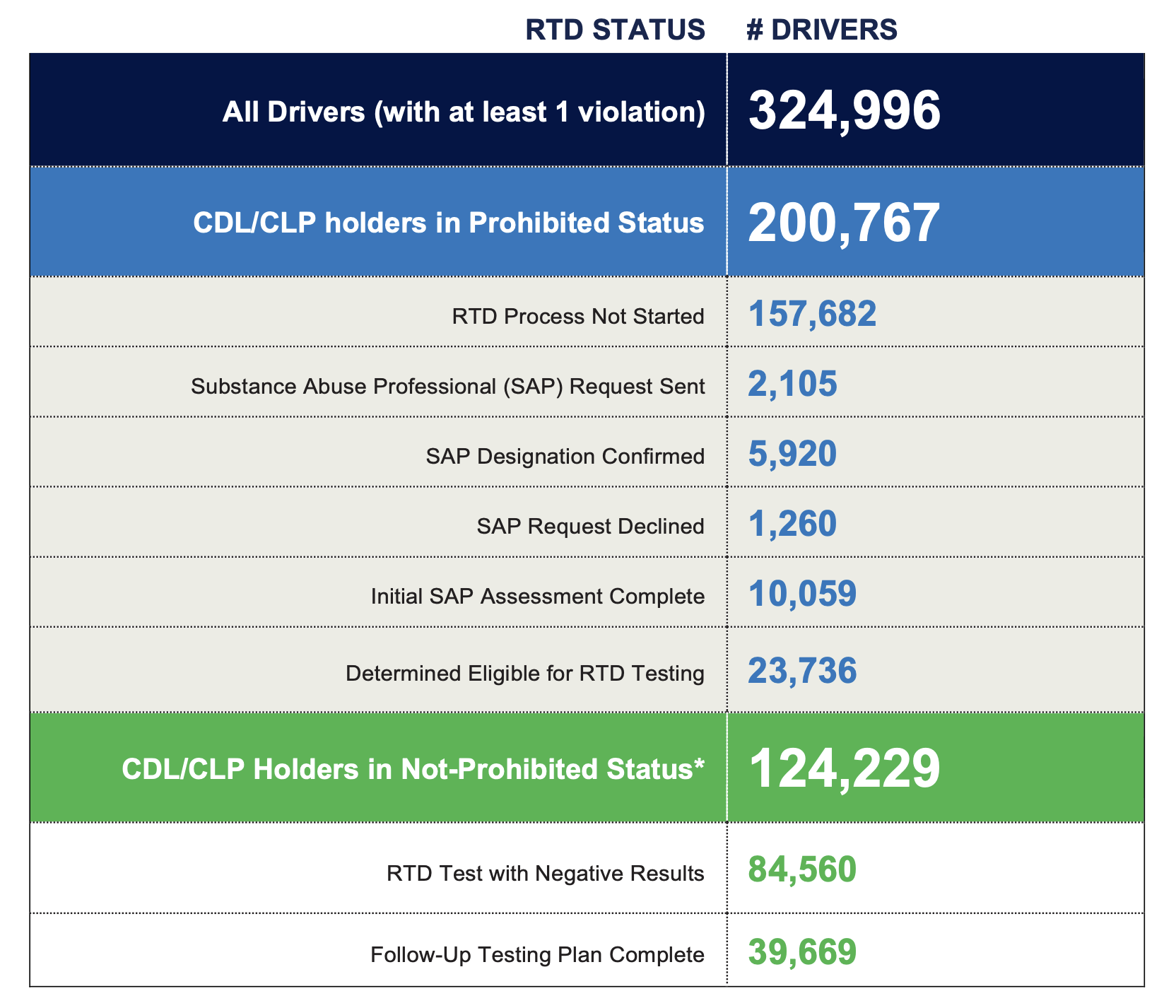
Let that last number sink in. Over 150,000 CDL holders are sitting on the sidelines, prohibited from operating a CMV, and haven't taken a step one toward getting back on the road.
What Are Drivers Testing Positive For?
The Clearinghouse breaks down positive tests by substance. Here's the cumulative picture since 2020:
Substance
Total Positive Tests
Marijuana (Δ9-THCA)
171,270
Cocaine
47,237
Methamphetamine
24,589
Amphetamine
22,932
Opioids (combined)
21,763
Other
5,793
Marijuana accounts for roughly 60% of all positive drug tests. Despite state legalization trends, federal law is crystal clear: CDL drivers cannot use marijuana, period. State law doesn't give you a pass on DOT testing.
What This Means for Fleets
The Minimum is a Floor, Not a Ceiling
Here's something that doesn't get talked about enough: 50% is the minimum testing requirement. There's nothing stopping you from testing at a higher rate if your company policy calls for it. In fact, FMCSA encourages it. As long as you're meeting the 50% minimum using DOT-compliant procedures, you can absolutely test more frequently.
Some carriers run their pools at 75% or even 100%. Why? Because a robust testing program:
- Acts as a deterrent
- Catches problems before they become crashes
- Demonstrates a culture of safety to insurers and shippers
- Reduces your liability exposure
Just remember: any testing above the DOT minimum must still follow proper protocols, and non-DOT tests must be kept completely separate from your DOT testing pool.
The Math on Testing Requirements
If you have 100 drivers in your random testing pool, you need to conduct at least 50 random drug tests and 10 random alcohol tests throughout the calendar year. Key points:
- Tests must be spread reasonably throughout the year (no cramming them all into December)
- Selections must be truly random using a scientifically valid method
- Every driver in the pool must have an equal chance of selection each period
- Owner-operators with only themselves as drivers must be in a consortium
Clearinghouse Queries Are Non-Negotiable
With Clearinghouse II now in full effect since November 2024, there's no hiding from violations anymore. State DMVs now have real-time access to the database, meaning a positive test doesn't just sideline a driver from your fleet; it can cost them their CDL entirely until they complete the RTD process.
Your compliance checklist:
- Pre-employment full query on every new hire (before they drive)
- Annual query on all current drivers
- Immediate removal of any driver who shows a prohibited status
- Proper documentation of all Clearinghouse-related actions
What This Means for Drivers
If you're behind the wheel or thinking about getting your CDL, here's the bottom line:
- Federal law applies to you regardless of state marijuana laws. I don't care if recreational weed is legal where you live. A positive THC test ends your driving privileges until you complete the return-to-duty process, and that's assuming you're willing and able to go through it.
- The Clearinghouse follows you. Hop carriers to avoid a failed test? Those days are over. Every motor carrier is required to query the Clearinghouse before hiring you and to do so annually while you're employed.
- Refusals count as positives. Don't show up for a random test? That's a refusal. Tamper with a sample? Refusal. Unable to provide a sufficient specimen without a legitimate medical explanation? You guessed it, refusal.
- The path back isn't quick or cheap. If you end up with a violation, you're looking at SAP evaluation, treatment (at your expense), return-to-duty testing, and follow-up testing for at least 12 months. The process typically costs $2,000-$5,000 or more out of your pocket.
The 50% testing rate isn't going anywhere until the industry demonstrates two consecutive years of positive rates below 1.0%. With marijuana positives continuing to dominate the Clearinghouse statistics and overall positive rates hovering above the threshold, we're likely looking at 50% testing through at least 2028, probably longer.
Smart fleet operators will treat this as business as usual and focus on what they can control: robust hiring
practices, consistent Clearinghouse queries, proper random selection procedures, and a company culture that takes substance abuse seriously.
For drivers, the message is: stay clean, know the rules, and don't bet your career on thinking you won't get selected.
Questions about your random testing program? Contact us for a compliance review.
About Trucksafe Consulting, LLC: Trucksafe Consulting is a full-service DOT regulatory compliance consulting and training service. We help carriers develop, implement, and improve their safety programs, through personalized services, industry-leading training, and a library of educational content. Trucksafe also hosts a livestream podcast on its various social media channels called Trucksafe LIVE! to discuss hot-button issues impacting highway transportation. Trucksafe is owned and operated by Brandon Wiseman and Jerad Childress, transportation attorneys who've assisted some of the nation’s leading fleets to develop and maintain cutting-edge safety programs. You can learn more about Trucksafe online at www.trucksafe.com and by following Trucksafe on LinkedIn, Facebook, Twitter, and YouTube. Or subscribe to Trucksafe's newsletter for the latest highway transportation news & analysis. Also, be sure to check out eRegs, the first app-based digital version of the federal safety regulations aimed at helping carriers and drivers better understand and comply with the regulations.