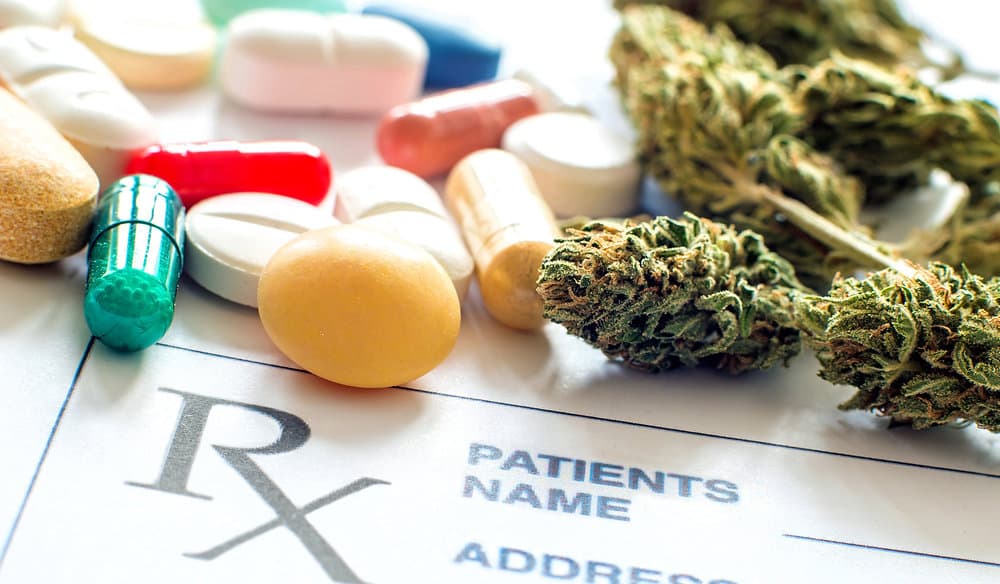
It's official. December 18, 2025, President Donald Trump signed an Executive Order directing the Attorney General to "take all necessary steps to complete the rulemaking process related to rescheduling marijuana to Schedule III of the Controlled Substances Act in the most expeditious manner."
For the cannabis industry, it's a landmark moment. For the trucking industry, it's the beginning of a very uncertain chapter, one that hinges entirely on how the Department of Health and Human Services, the Department of Justice, and the Department of Transportation coordinate their response.
If history is any indicator, that coordination is exactly where things fall apart.
What the Executive Order Actually Says
Let's start with what Trump actually signed. The Executive Order, titled "Increasing Medical Marijuana and Cannabidiol Research," does several things:
First, it directs the Attorney General to expedite the marijuana rescheduling process. The DEA proposed this rule back in May 2024, received nearly 43,000 public comments, and has been awaiting an administrative law hearing. Trump is telling the DOJ to stop waiting and get it done.
Second, it directs the White House Deputy Chief of Staff for Legislative, Political, and Public Affairs to work with Congress on updating the statutory definition of hemp-derived cannabinoid products, including establishing an upper limit on THC per serving and CBD-to-THC ratio requirements.
Third, it directs HHS to develop research methods that utilize real-world evidence to improve access to hemp-derived cannabinoid products and to inform standards of care.
What the order does not do is address the elephant in the room: What happens to the 4 million CDL holders subject to federal drug testing when the substance they're most frequently testing positive for drops from Schedule I to Schedule III?
The HHS Problem
Here's the reality that trucking industry stakeholders have been raising for over a year: The Department of Health and Human Services sets the Mandatory Guidelines for Federal Workplace Drug Testing Programs. Those guidelines only authorize testing for Schedule I and Schedule II controlled substances.
Marijuana is currently Schedule I. That's why it's on the five-panel DOT drug test.
Schedule III drugs are not on that panel. Never have been.
The moment marijuana officially moves to Schedule III, HHS arguably loses its statutory authority to include marijuana in the mandatory testing guidelines, unless someone creates an explicit carve-out or Congress acts to preserve testing authority.
Former Transportation Secretary Pete Buttigieg attempted to reassure Congress that rescheduling "would not alter DOT's marijuana testing requirements" because marijuana is "identified by name, not by reference to one of those classes" in 49 CFR Part 40. That interpretation is legally optimistic. DOT's testing procedures must follow HHS scientific and technical guidelines, which have been the law since the Omnibus Transportation Employee Testing Act of 1991. If HHS can't authorize testing for a Schedule III substance, DOT can't require it.
What’s worse? We already have a case study in how HHS handles these interagency coordination challenges. It's called oral fluid testing. And it's been a disaster.
The Oral Fluid Testing Debacle Is A Preview of What's Coming
In May 2023, DOT published a final rule authorizing oral fluid testing as an alternative to urine testing for safety-sensitive transportation employees. The rule was hailed as a major advancement. Oral fluid testing has a shorter detection window that better correlates with recent use, is harder to cheat on, and is less invasive than observed urine collection.
There was just one catch: For employers to implement oral fluid testing, HHS must certify at least two laboratories. One lab for initial testing, and another for split-specimen testing if the driver requests it.
The DOT rule went into effect on June 1, 2023.
Here we are, December 2025, two and a half years later, and as of the January 2025 HHS-certified laboratory list: "At this time, there are no laboratories certified to conduct drug and specimen validity tests on oral fluid specimens."
Zero. Not one. In over two and a half years.
DOT-approved oral fluid testing. The regulations are on the books. Carriers want to use it. The technology exists. The laboratories are ready. But HHS has not certified a single facility to conduct the testing.
The result? DOT had to issue a proposed rulemaking in December 2024 to remove an "inadvertent factual impossibility" from its regulations. This provision required oral fluid samples under certain circumstances, even though oral fluid testing did not exist.
Drug testing facilities that invested in oral fluid collection training, equipment, and procedures are stuck. "We have spent quite a bit to get people trained and in new lab kits in preparation for the new regulation," one industry representative explained, "and delaying this any further means return on these investments will be pushed back as well."
The National Drug and Alcohol Screening Association warned that "delaying collector training until after laboratories are HHS-certified will cause small businesses that have met the train-the-trainer course requirements to suffer the loss of training revenue. It will also create a shortage of properly trained and qualified oral fluid collectors."
This is the agency that will now be tasked with figuring out how to maintain marijuana testing authority after rescheduling.
How the Pieces Are Supposed to Fit Together
To understand why this matters, you need to know how the federal drug testing authority actually works.
The Omnibus Transportation Employee Testing Act of 1991 required DOT agencies to implement drug testing for safety-sensitive transportation employees. The law also required DOT to follow HHS scientific and technical guidelines for conducting that testing.
HHS publishes the Mandatory Guidelines for Federal Workplace Drug Testing Programs. These guidelines specify which drugs can be tested, the cutoff levels, which specimens can be collected, which laboratories are certified to process samples, and how results must be verified.
DOT's regulations, 49 CFR Parts 40 and 382, for procedures and FMCSA-specific requirements, respectively, build on those HHS guidelines. When DOT says it tests for marijuana, cocaine, amphetamines, PCP, and opioids, it's because HHS authorizes testing for those substances.
The testing laboratories that process those samples must be HHS-certified. Medical Review Officers follow HHS protocols. The entire chain of custody, from collection to verification, operates under HHS authority.
When marijuana moves to Schedule III, that authority becomes legally questionable. HHS guidelines authorize testing for Schedule I and II controlled substances. Without a statutory fix, an executive carve-out, or a formal HHS determination that marijuana testing remains authorized regardless of scheduling, the legal foundation for mandatory testing evaporates.
What the Executive Order Gets Right, and What It Misses
To its credit, the Trump Executive Order explicitly recognizes HHS's role in the rescheduling process. The order acknowledges that the 2023 HHS recommendation formed the basis for DOJ's proposed rescheduling rule. It directs HHS to develop research frameworks for cannabinoid products, but it's focused on expanding medical marijuana access and CBD research, not on preserving transportation safety testing.
The order's silence on safety-sensitive testing is deafening. There's no mention of DOT. No mention of CDL holders. No mention of the Clearinghouse. No carve-out language preserving the testing authority for transportation workers.
The White House fact sheet touts the benefits of rescheduling: "Rescheduling marijuana corrects the Federal government's long delay in recognizing the medical use of marijuana and will vastly improve research on safety and efficacy."
What it doesn't mention is that 59% of positive drug tests in the FMCSA Clearinghouse are for marijuana. Or that 184,839 CDL holders have tested positive for THC since 2020. Or that the entire DOT drug testing program exists because a marijuana-impaired engineer caused a train collision that killed 16 people in Chase, Maryland, in 1987.
The Numbers That Should Terrify You
Let's talk about what's at stake. According to FMCSA Clearinghouse data through April 2025, positive drug tests account for 81% of all violations reported. Of those, the marijuana metabolite represents 59% of substances identified. In 2024 alone, 34,936 CDL holders tested positive for delta-9 THC.
Currently, 291,664 commercial vehicle drivers have at least one drug or alcohol violation on record. Of those, 184,337 are in prohibited status, meaning they cannot legally operate a CMV until completing the return-to-duty process.
When Clearinghouse II took effect on November 18, 2024, drivers with a prohibited status lost their CDL privileges. State licensing agencies gained real-time access to violation data.
All of that accountability infrastructure depends on DOT's authority to test for marijuana. Remove that authority, and the Clearinghouse becomes a database tracking violations for a substance that employers can no longer screen for.
What Carriers Should Do Now
If you're a motor carrier, you cannot wait to see how this plays out at the federal level. You need to act now.
Strengthen Your Company Drug Policy
DOT does not prohibit motor carrier employers from instituting a "company authority" testing program that is in addition to, and distinct from, the required DOT testing program. Under such non-DOT programs, employers could potentially test for other drugs, though carriers should take care to run any such requirements by their employment counsel.
If federal testing authority disappears, company-policy testing remains. You might consider tailoring your policy to:
- Explicitly list marijuana as a prohibited substance regardless of state legalization or federal scheduling status
- Establish pre-employment, random, post-accident, and reasonable suspicion testing protocols under company authority
- Document disciplinary consequences up to and including termination for positive marijuana tests
- Apply consistently to all safety-sensitive employees
Consider the Nuclear Verdict Exposure
Nuclear verdicts remain the top concern for trucking companies large and small. No carrier wants to be the defendant in a wrongful death lawsuit where the plaintiff's attorney asks: "You knew marijuana was rescheduled, you knew your driver used marijuana, and you put him behind the wheel anyway?"
Carriers are encouraged to go above and beyond minimum compliance, adopting best practices that demonstrate a genuine commitment to safety. If DOT testing disappears, your company's testing program becomes your primary defense.
Consult Legal Counsel
State marijuana laws create a patchwork of employer obligations. Organizations should have legal counsel review the rules and regulations in the jurisdictions in which they operate. Non-DOT testing programs must comply with state employment laws, which vary significantly.
Document Everything
In the litigation environment we're operating in, documentation is survival. If you're maintaining marijuana testing under company policy, document your rationale. Document your training programs. Document your enforcement actions. Create a paper trail that demonstrates you took every reasonable step to keep impaired drivers off the road.
What Drivers Need to Understand
For the drivers reading this, the Executive Order has been signed, but rescheduling isn't instantaneous. The DOJ rulemaking process must still be completed. Marijuana remains Schedule I today. DOT testing continues to include marijuana. A positive test still ends your driving career until you complete the return-to-duty process.
Even if the federal testing authority disappears, most carriers worth working for will continue to test for marijuana under company policy. Insurers will demand it. Shippers will require it. The liability exposure is too catastrophic to ignore.
The smart drivers understand that federal scheduling status and employment eligibility are two different things. Your employer can prohibit marijuana use regardless of what the federal government does.
Watch HHS
The Trump Executive Order directs expedited action on rescheduling. The Attorney General will move to complete the process. This is going to happen.
The question is not whether marijuana will be rescheduled. The question is whether anyone will create a mechanism to preserve DOT testing authority when it does.
And based on what we've seen with oral fluid testing, where HHS has failed to certify a single laboratory in over two and a half years despite DOT approving the testing method, the trucking industry should not be optimistic about seamless interagency coordination.
The same agency that can't get oral fluid testing off the ground is now the linchpin for determining whether 4 million CDL holders can continue to be tested for the substance that causes 60% of their positive drug results.
Carriers…Build your own safety net. Don't assume the federal government will build it for you.
About Trucksafe Consulting, LLC: Trucksafe Consulting is a full-service DOT regulatory compliance consulting and training service. We help carriers develop, implement, and improve their safety programs, through personalized services, industry-leading training, and a library of educational content. Trucksafe also hosts a livestream podcast on its various social media channels called Trucksafe LIVE! to discuss hot-button issues impacting highway transportation. Trucksafe is owned and operated by Brandon Wiseman and Jerad Childress, transportation attorneys who've assisted some of the nation’s leading fleets to develop and maintain cutting-edge safety programs. You can learn more about Trucksafe online at www.trucksafe.com and by following Trucksafe on LinkedIn, Facebook, Twitter, and YouTube. Or subscribe to Trucksafe's newsletter for the latest highway transportation news & analysis. Also, be sure to check out eRegs, the first app-based digital version of the federal safety regulations aimed at helping carriers and drivers better understand and comply with the regulations.