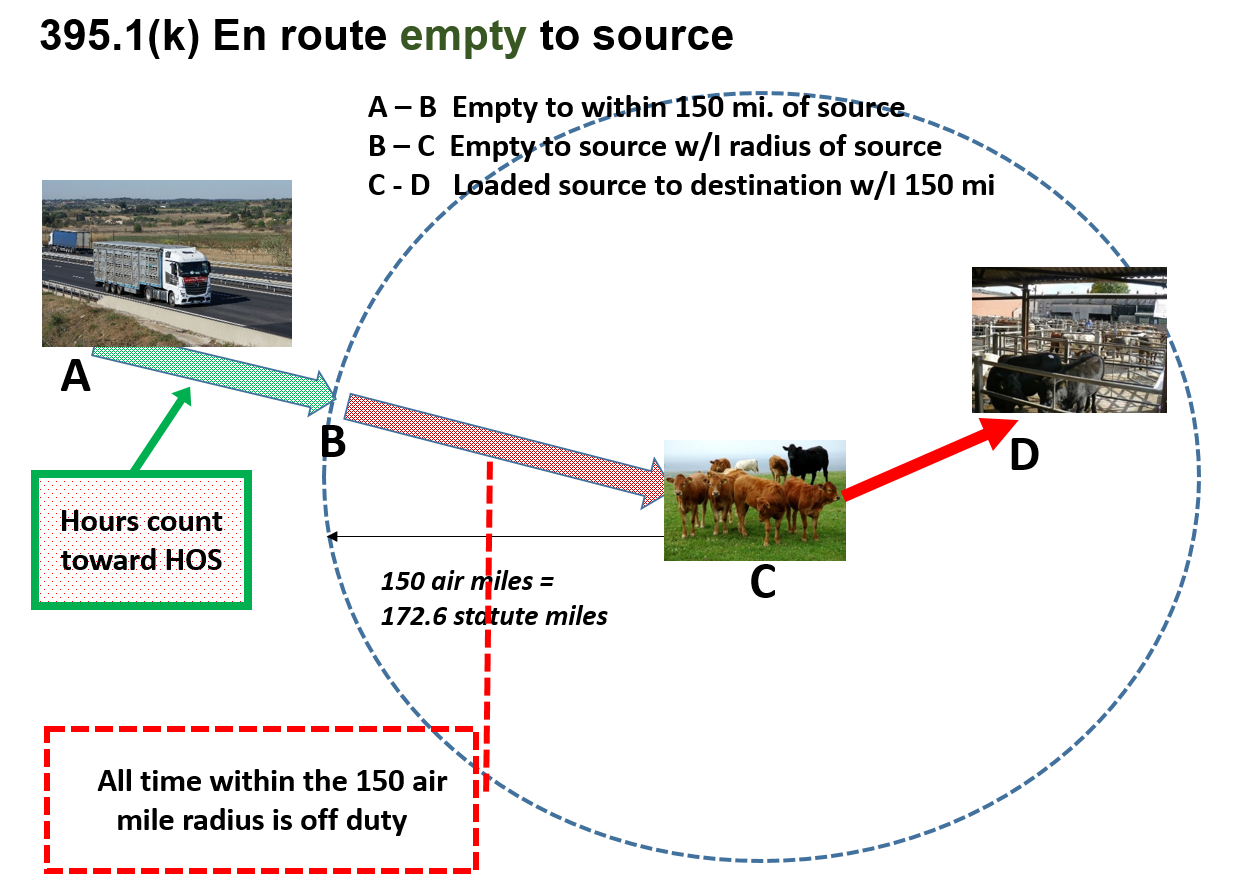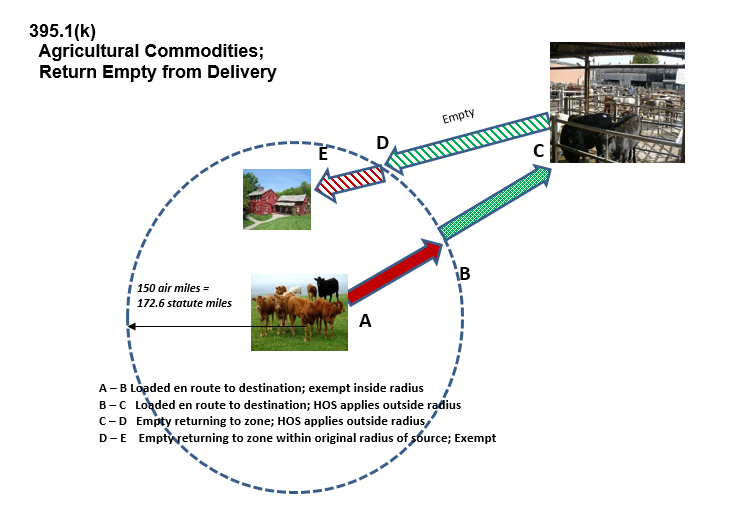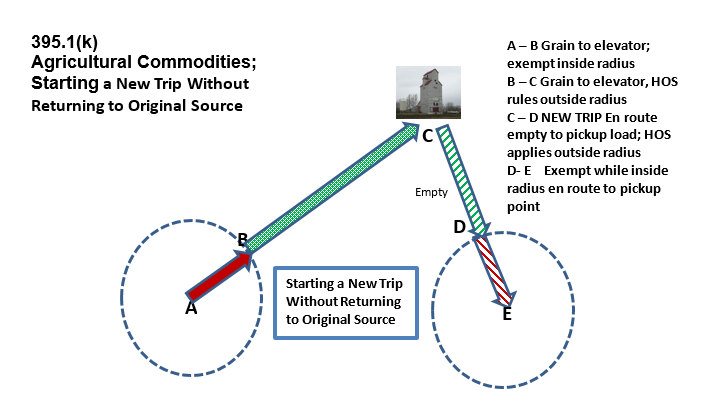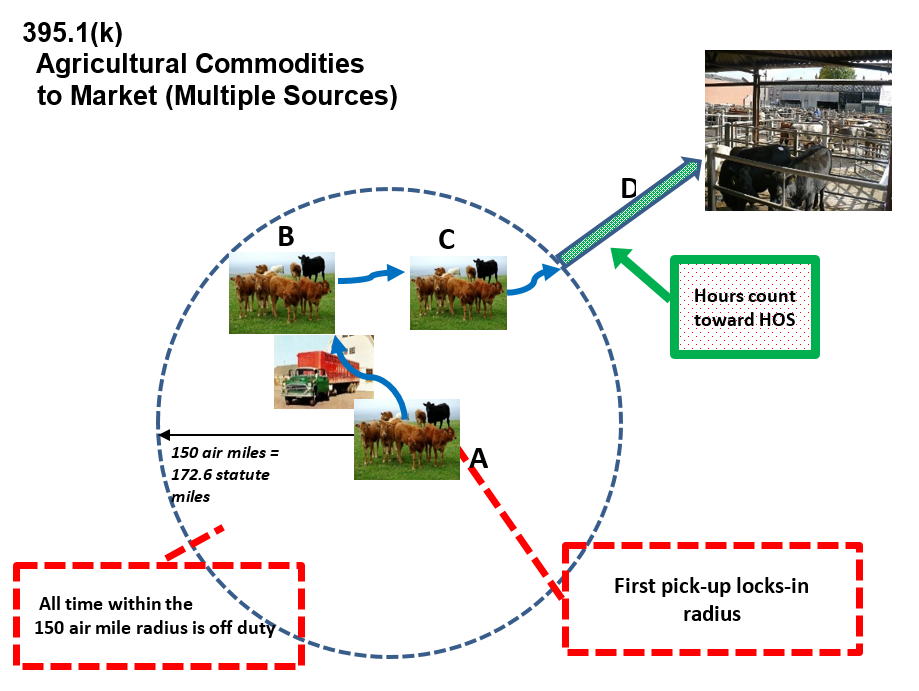
On November 29, 2020, the Federal Motor Carrier Safety Administration (FMCSA)--a division of the USDOT--published an interim final rule clarifying the regulatory definitions of "agricultural commodity," "livestock," and "non-processed foods," as those terms are used for purposes of the agency's hours-of-service exemption for certain agricultural operations. Although the Federal Motor Carrier Safety Regulations (FMCSRs) have long contained agricultural-related exemptions, the FMCSA's recent rule highlights some of the ambiguity surrounding those exemptions that has persisted over the years. In this article, we'll explore the FMCSRs' various agriculture-related exemptions, including to whom they apply and what specific relief they offer.
Broad "Covered Farm Vehicle" FMCSR Exemption
Generally speaking, the FMCSRs apply to the operation of "commercial motor vehicles" (CMVs) in interstate commerce. In another article, we discussed the significance of that term in this context and the extent to which carriers who operate CMVs are subject to the FMCSRs, but to summarize, a CMV is generally defined to mean a "self-propelled or towed motor vehicle used on a highway in interstate commerce to transport . . . property when the vehicle . . . has a gross vehicle weight rating or gross combination weight rating . . . of 10,001 pounds or more. 49 C.F.R. 390.5. That said, the FMCSRs contain a number of fairly broad exemptions, including one for operators of "covered farm vehicles."
In particular, the pertinent regulation--49 C.F.R. 390.39--provides the following:
A covered farm vehicle, as defined in § 390.5, including the individual operating that vehicle, is exempt from the following:
(1) Any requirement relating to commercial driver's licenses in 49 CFR Part 383 or controlled substances and alcohol use and testing in 49 CFR Part 382;
(2) Any requirement in 49 CFR Part 391, Subpart E, Physical Qualifications and Examinations.
(3) Any requirement in 49 CFR Part 395, Hours of Service of Drivers.
(4) Any requirement in 49 CFR Part 396, Inspection, Repair, and Maintenance.
Thus, any driver operating a vehicle that qualifies as a "covered farm vehicle" is exempt from a large portion of the FMCSRs. The regulations define a "covered farm vehicle" as follows:
Covered farm vehicle -
(1) Means a straight truck or articulated vehicle -
(i) Registered in a State with a license plate or other designation issued by the State of registration that allows law enforcement officials to identify it as a farm vehicle;
(ii) Operated by the owner or operator of a farm or ranch, or an employee or family member of an owner or operator of a farm or ranch;
(iii) Used to transport agricultural commodities, livestock, machinery or supplies to or from a farm or ranch; and
(iv) Not used in for-hire motor carrier operations; however, for-hire motor carrier operations do not include the operation of a vehicle meeting the requirements of paragraphs (1)(i) through (iii) of this definition by a tenant pursuant to a crop share farm lease agreement to transport the landlord's portion of the crops under that agreement.
(2) Meeting the requirements of paragraphs (1)(i) through (iv) of this definition:
(i) With a gross vehicle weight or gross vehicle weight rating, whichever is greater, of 26,001 pounds or less may utilize the exemptions in § 390.39 anywhere in the United States; or
(ii) With a gross vehicle weight or gross vehicle weight rating, whichever is greater, of more than 26,001 pounds may utilize the exemptions in § 390.39 anywhere in the State of registration or across State lines within 150 air miles of the farm or ranch with respect to which the vehicle is being operated.
In sum, there are four specific conditions that must be met in order for a vehicle to qualify as a "covered farm vehicle." First, it must be registered as a farm vehicle and operated with state-issued farm plates. Second, it must be operated by the owner of a farm or an employee or family member of the owner. Third, it must be used to haul agricultural commodities, livestock, or machinery to or from a farm. And fourth, the vehicle must not be used in for-hire motor carrier operations, unless such operations are by a tenant pursuant to a crop-share farm lease agreement. If any one of these four conditions are not met, then the vehicle does not qualify as a "covered farm vehicle" and its operations would be subject to the FMCSRs unless some other exemption applies.
If a particular vehicle otherwise qualifies as a covered farm vehicle, it may still be subject to certain mileage restrictions listed in the second half of the regulation, depending on its weight. For example, if the vehicle (or combination) exceeds 26,000 pounds, then it can only be operated within a 150 air-mile radius of the farm in order to still qualify for the exemption.
Limited "Farm Vehicle Operator" Exemptions
In addition to the broad "covered farm vehicle" exemption, the FMCSRs contain more limited exemptions for "farm vehicle operators" who do not otherwise qualify for the broader exemption. In particular, "farm vehicle operators" may be (if the state in which they are domiciled allows for such an exemption) exempt from the commercial driver's license (CDL) requirement when operating a farm vehicle that is (i) controlled and operated by a farmer, including operation by employees or family members; (ii) used to transport either agricultural products, farm machinery, farm supplies, or both to or from a farm; (iii) not used in the operations of a for-hire motor carrier, except for an exempt motor carrier as defined in 49 C.F.R. 390.5; and (iv) used within 150 miles of the farmer's farm. See 49 C.F.R. 383.3. Further, "farm vehicle operators" meeting the criteria listed above may be exempt from the federal drug/alcohol testing regulations in 49 C.F.R. Part 382 if the state in which they are domiciled has chosen to recognize the CDL exemption discussed above. See 49 C.F.R. 382.103.