
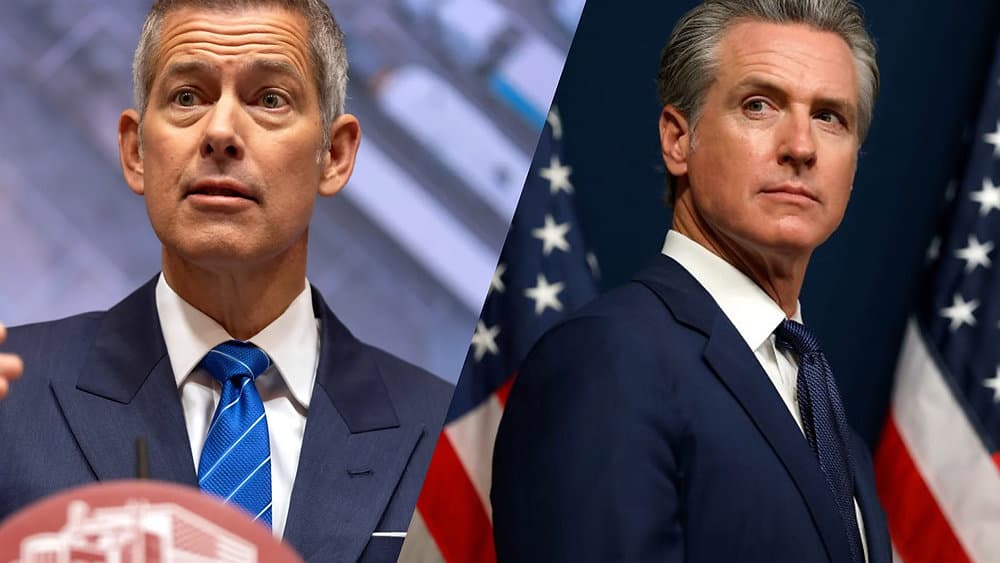
On January 7, 2026, FMCSA issued a Final Determination of Substantial Noncompliance against the California Department of Motor Vehicles, formally concluding that the state has failed to comply with federal standards governing the issuance of non-domiciled commercial learner’s permits and commercial driver’s licenses. As a result, FMCSA will withhold millions of dollars in federal highway funding beginning in fiscal year 2027.
This determination is notable not only for its financial impact, but for what it signals about FMCSA’s willingness to escalate enforcement when states do not follow through on corrective commitments.
FMCSA’s determination stems from findings made during a 2025 annual program review of California’s CDL program. That review uncovered widespread deficiencies in how California issued non-domiciled CLPs and CDLs.
According to the agency, California issued thousands of non-domiciled credentials that did not align with federal requirements. In many cases, CDLs were issued with expiration dates that exceeded a driver’s lawful presence documentation. In others, licenses were issued to Mexican and Canadian nationals who were not present in the United States under DACA and were therefore ineligible to receive a non-domiciled CDL under FMCSA’s interpretation of existing regulations. The agency also found failures in California’s use of temporary or interim credentials and in its reporting of those credentials to CDLIS.
FMCSA emphasized in its final determination that these were not isolated or technical errors. Rather, the agency concluded that California’s practices reflected an “unacceptable deviation” from federal CDL standards and posed an ongoing safety risk .
What ultimately pushed this matter into a final enforcement posture was not merely the underlying violations, but California’s failure to meet a key corrective deadline. After issuing a Preliminary Determination of Noncompliance in September 2025, FMCSA gave California a path forward. Central to that path was California DMV’s commitment to rescind approximately 17,000 improperly issued non-domiciled CDLs by January 5, 2026. FMCSA relied on that commitment when it issued a Conditional Determination in November, temporarily holding off on sanctions. But in late December, California DMV announced—without FMCSA’s approval—that it would delay the cancelations until March 6, 2026. FMCSA immediately objected, warning that the extension was unacceptable and that delaying rescission of noncompliant licenses prolonged an identified safety concern. California nonetheless proceeded with the delay.
According to FMCSA, that unilateral decision undermined the entire corrective action plan. The agency stressed that federal regulations require corrective actions not only to be adequate, but to be completed on a schedule mutually agreed upon by the state and FMCSA. California’s failure to meet that standard, FMCSA concluded, left it no choice but to issue a final determination .
The most immediate impact of FMCSA’s decision is financial. Beginning in Fiscal Year 2027, FMCSA will withhold four percent of California’s National Highway Performance Program and Surface Transportation Block Grant funds, an amount the agency estimates at approximately $158 million. If California remains out of compliance, FMCSA warned that the penalty could increase to eight percent in FY 2028, potentially doubling the withheld amount to more than $316 million. FMCSA also made clear that continued noncompliance could lead to even more severe consequences, including possible decertification of California’s CDL program, a step that would significantly disrupt commercial licensing within the state .
FMCSA’s final determination against California marks one of the strongest enforcement actions the agency has taken against a state CDL program. It reflects a broader shift in posture, one where FMCSA is increasingly willing to use funding leverage to enforce national licensing standards rather than relying solely on guidance, technical assistance, or informal pressure.
For motor carriers and fleet safety professionals, the announcement is a reminder that state-issued credentials are not beyond federal scrutiny, and that failures at the state level can have cascading effects across the industry.
FMCSA has stated that it remains open to working with California to restore compliance. But for now, the agency has drawn a firm line—one backed by substantial financial penalties and the clear expectation that federal CDL standards will be enforced uniformly.
About Trucksafe Consulting, LLC: Trucksafe Consulting is a full-service DOT regulatory compliance consulting and training service. We help carriers develop, implement, and improve their safety programs, through personalized services, industry-leading training, and a library of educational content. Trucksafe also hosts a livestream podcast on its various social media channels called Trucksafe LIVE! to discuss hot-button issues impacting highway transportation. Trucksafe is owned and operated by Brandon Wiseman and Jerad Childress, transportation attorneys who've assisted some of the nation’s leading fleets to develop and maintain cutting-edge safety programs. You can learn more about Trucksafe online at www.trucksafe.com and by following Trucksafe on LinkedIn, Facebook, Twitter, and YouTube. Or subscribe to Trucksafe's newsletter for the latest highway transportation news & analysis. Also, be sure to check out eRegs, the first app-based digital version of the federal safety regulations aimed at helping carriers and drivers better understand and comply with the regulations.
